

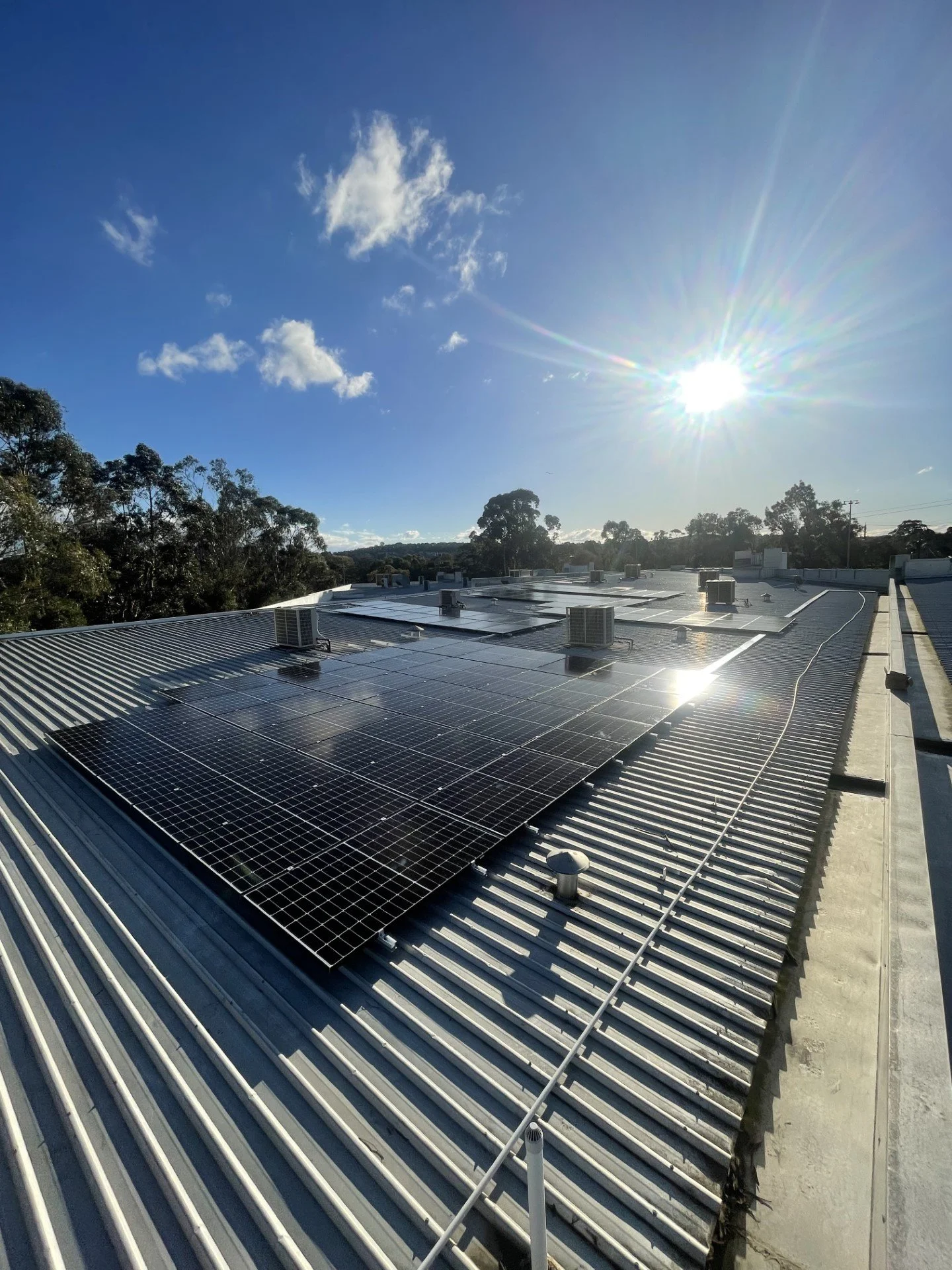
Things to consider…
-
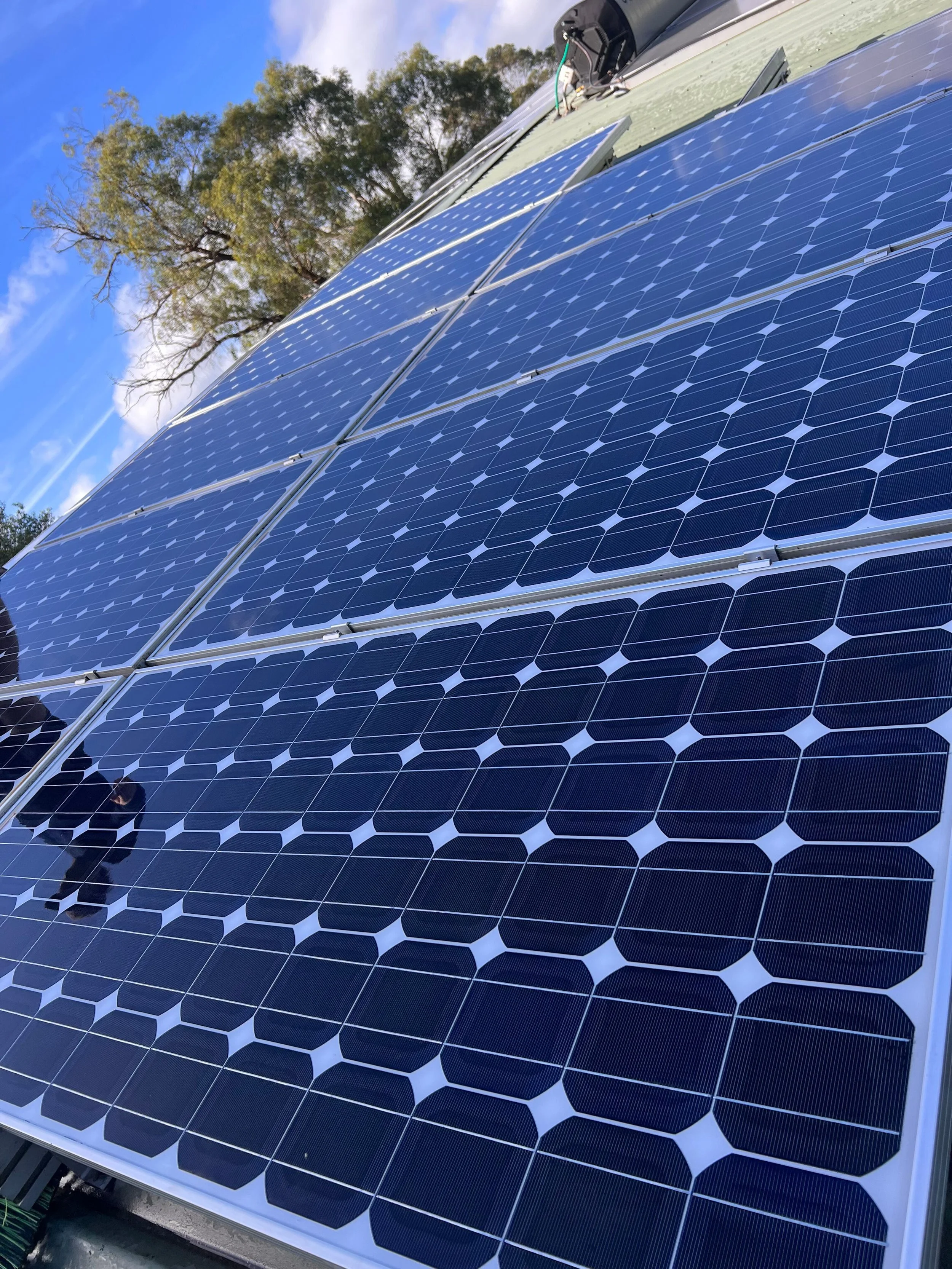
Why hire a professional?
Solar panels work at their peak efficiency when they are clean and free from dust, dirt, and debris. Professionals have the expertise and tools to thoroughly clean your panels, ensuring they operate at their full capacity. This translates into more electricity generation and higher energy savings over time.
Safety: Climbing onto your roof to clean solar panels can be risky, especially if you lack the proper training and safety equipment. Professional cleaners are trained to handle such tasks safely, minimizing the risk of accidents or damage to your panels and roof.
Preservation of Warranty: Many solar panel manufacturers require regular maintenance as a condition of their warranty. By hiring a professional, you can ensure that your panels are cleaned and maintained in a manner that keeps your warranty intact.
Longevity of Equipment: Solar panels are a significant investment, and proper maintenance can extend their lifespan. Professional cleaning helps prevent long-term damage caused by the buildup of grime, bird droppings, or other contaminants.
Efficient Cleaning Techniques: Professionals use industry-standard cleaning equipment and techniques to remove stubborn stains and pollutants effectively. Their experience ensures that your panels are cleaned thoroughly without causing any damage.
Time and Convenience: Cleaning solar panels can be a time-consuming task, especially if you have a large installation. Hiring professionals frees you from this chore, allowing you to focus on other priorities.
Environmental Benefits: Maintaining your solar panels' efficiency ensures you get the most out of your clean, renewable energy source. This reduces your reliance on non-renewable energy, contributing to a greener and more sustainable future.
-
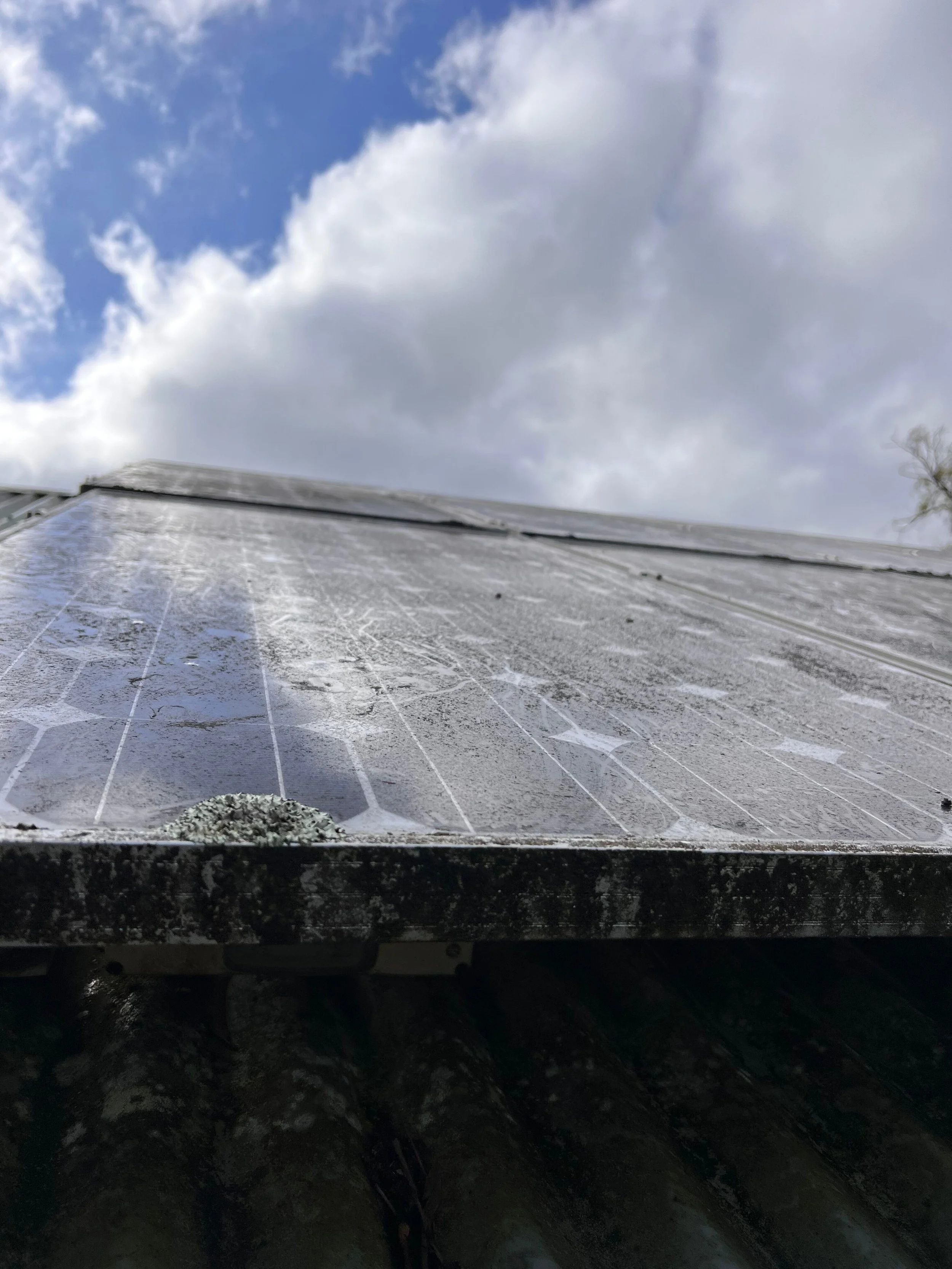
Algae and Lichen
Algae and lichen growth on the surface of solar panels can obstruct sunlight from reaching the photovoltaic cells. This shading effect decreases the panels' energy production, leading to lower electricity generation and reduced energy savings.
Loss of Productivity: As algae and lichen accumulate, they create a layer of organic material that can trap dust and dirt. This layer, known as biofilm, further hinders the penetration of sunlight and reduces the panels' efficiency. Over time, this can result in a significant loss of productivity.
Panel Damage: Lichen, in particular, can be invasive. Its root-like structures can penetrate the protective glass covering of solar panels, leading to physical damage. This damage may not only affect the appearance of the panels but also compromise their structural integrity, potentially leading to more severe issues.
Uneven Soiling: Algae and lichen growth can create an uneven soiling pattern on the surface of the panels. This uneven distribution of dirt and organic matter can cause hotspots, where some areas of the panel become significantly hotter than others during operation. Hotspots can degrade the panels faster and reduce their overall lifespan.
Aesthetic Issues: Algae and lichen growth can make solar panels appear unsightly. This may be a concern for homeowners and businesses seeking to maintain a clean and professional appearance for their properties.
Maintenance Costs: Regular cleaning and maintenance are required to remove algae and lichen from solar panels. Neglecting this maintenance can result in increased costs over time, as the growth becomes more stubborn and difficult to remove.
-
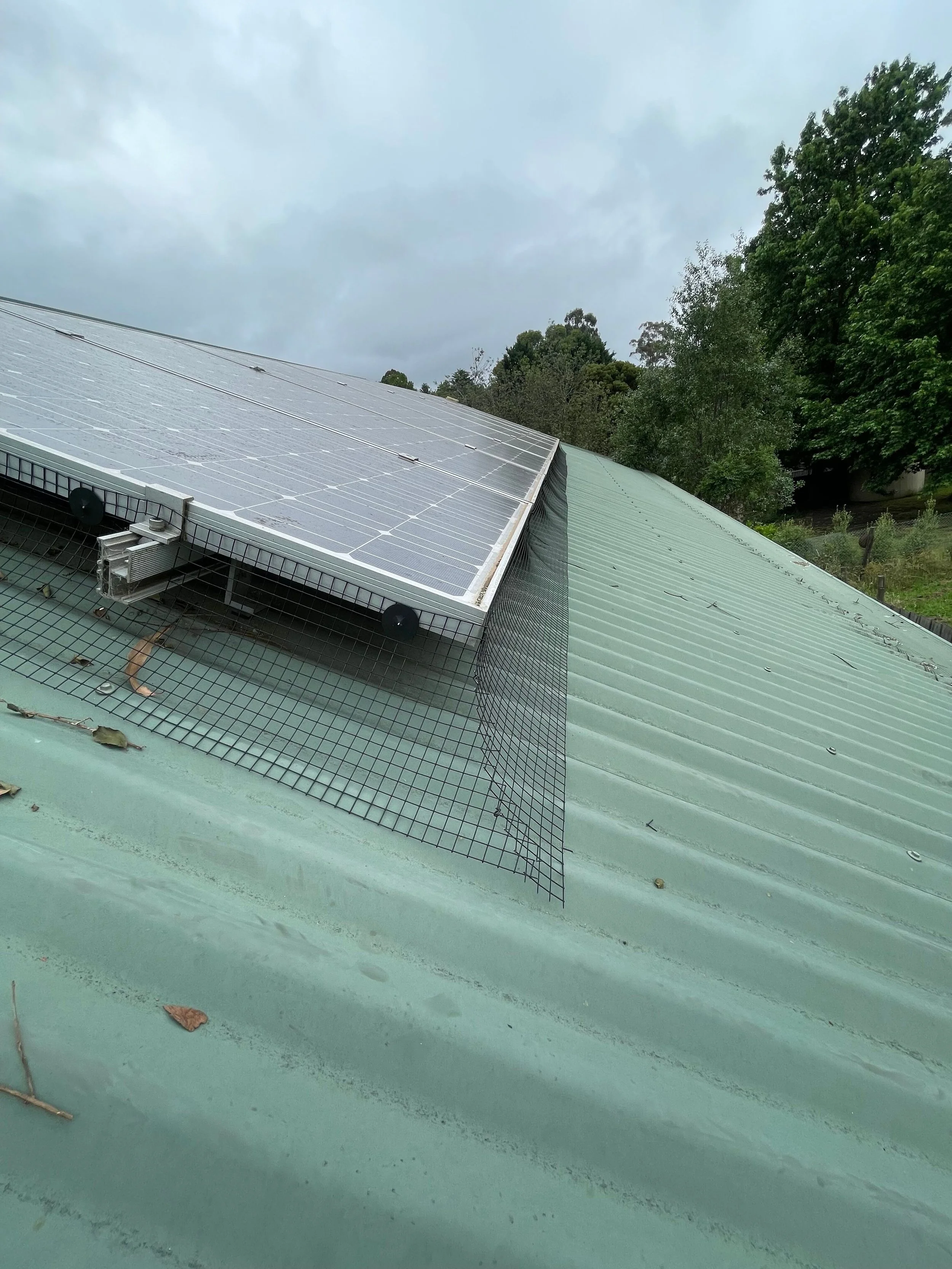
Netting
Installing netting around solar panels is an effective strategy to prevent animals from nesting under or around them. Here's a brief description of how this protective measure works:
Animal Deterrence: Netting, often made of durable materials like mesh or wire, is strategically placed around the perimeter of solar panels. This physical barrier acts as a deterrent for birds, squirrels, and other small animals that might seek refuge or build nests beneath the panels.
Blocking Entry Points: Netting is secured over potential entry points, such as the gaps between the solar panels and the mounting structure or the underside of the solar array. This blocks access to the sheltered spaces under the panels, making them less appealing to nesting animals.
Preventing Nesting Materials: By covering the area with netting, animals are unable to bring in nesting materials like twigs, leaves, or debris. This discourages them from attempting to build nests in and around the solar panel system.
Reducing Damage: Preventing animal nesting can help minimize potential damage to the solar panel system. Animals can sometimes chew through wiring or cause other forms of damage, which can lead to costly repairs and reduced efficiency.
Maintaining Efficiency: Keeping animals away from solar panels through netting helps maintain the panels' efficiency by preventing shading or debris accumulation caused by nesting activities. This ensures that the panels continue to generate optimal energy output.